
Each brain is exposed to different circumstances. It's very likely that your brain is unique in the history of the universe.
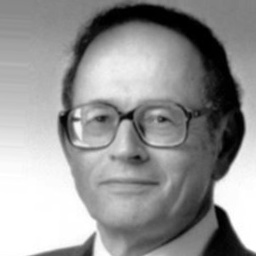
Gerald Edelman American biologist
Each brain is exposed to different circumstances. It's very likely that your brain is unique in the history of the universe.
Gerald Edelman American biologist
Many cognitive psychologists see the brain as a computer. But every single brain is absolutely individual, both in its development and in the way it encounters the world.
We're inquiring into the deepest nature of our constitutions: How we inherit from each other. How we can change. How our minds think. How our will is related to our thoughts. How our thoughts are related to our molecules.
Your brain develops depending on your individual history. What has gone on in your own brain and its consciousness over your lifetime is not repeatable, ever - not with identical twins, not even with conjoined twins.
A knowledge of brain science will provide one of the major foundations of the new age to come. That knowledge will spawn cures for disease, new machines based on brain function, further insights into our nature and how we know.
Hebb place the Law of Effect at the synaptic level by proposing a correlation model of synaptic modification similar to that of Hayek (1952). This work was seminal in providing a basis for many subsequent theoretical studies . .
Since the idea that modification of synaptic function can provide a basis for memory arose shortly after the first anatomical description of the synapse a number of models (Hebb 1949 . . Hayek 1952 . . Kendel 1981) have been proposed in which various cognitive activities are represented by combinations of the firing patterns of individual neurons.