
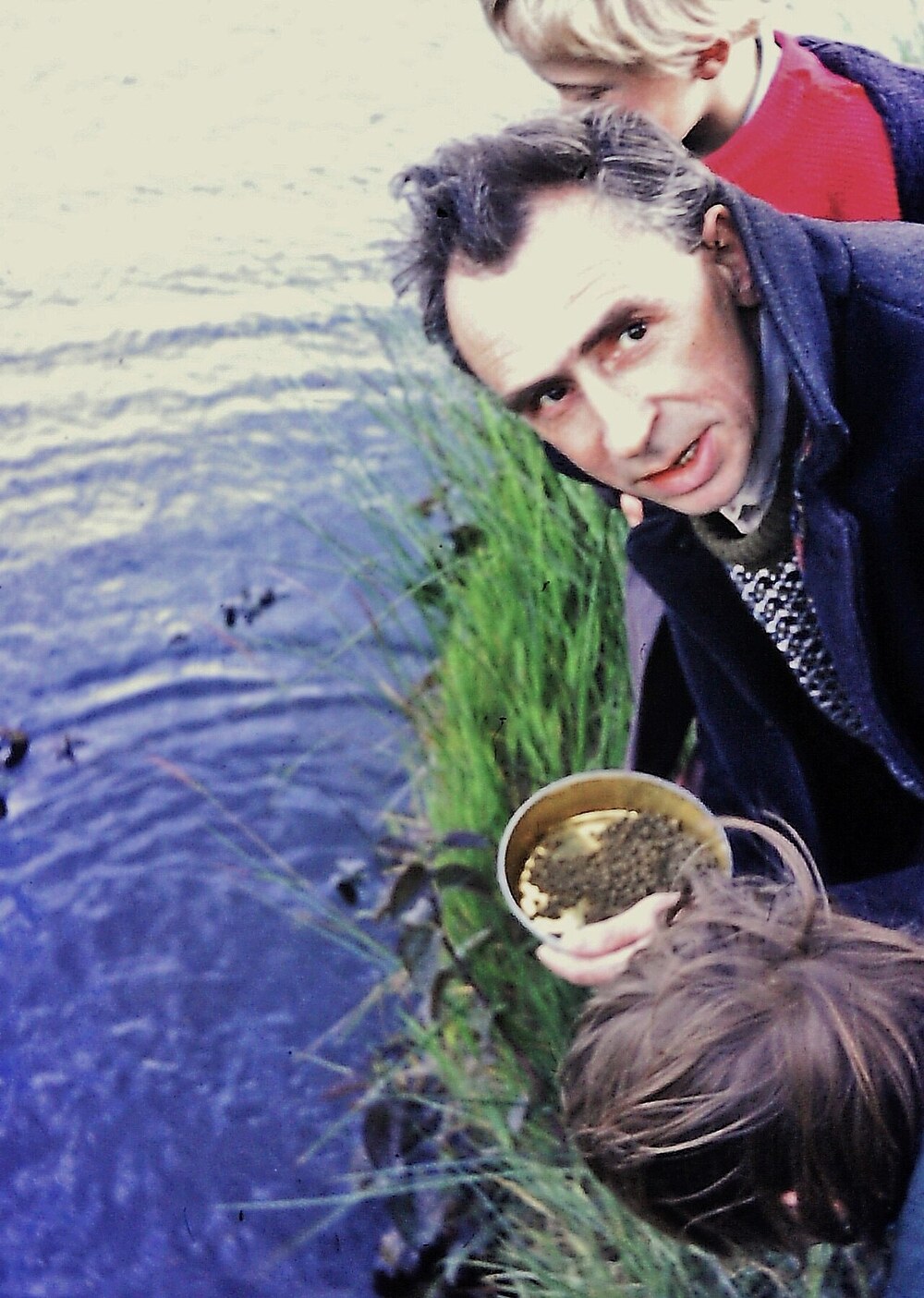
Scottish poet, writer, artist and gardener
Ian Hamilton Finlay Quotes: 17 Sayings on Religion and Life
By the Quotlr.com Team
Ian Hamilton Finlay was a Scottish poet, writer, artist and gardener. He is best known for his integration of words and images in his works, often in the form of concrete poetry. Finlay was a major figure in the international art scene and is widely considered one of the most important post-war British artists. Following is our collection on famous quotes by Ian Hamilton Finlay on religion, life, education.
- Born
- October 28, 1925
- Died
- March 27, 2006
- Known as
- Scottish Poet
-
Certain gardens are described as retreats when they are really attacks.
-
I am not a modern man, I am just a wee old fashioned one.
-
As a friendly one. I would still like to write concrete poems, but I can only do it sometimes.
-
People have always found me challenging - I don't know why, when I am only being myself. I don't understand why they find me so annoying but they do. It is pity, but that is how it is.
-
I am always a beginner. I only try to include different parts of life; the pastoral, the tragic, et cetera.
- Advertisement
-
Little Sparta is a garden in the traditional sense. It is perhaps not like other modern gardens, but I think that other times would have had no difficulty with it.
-
I came to these mediums through having the garden, and of course, people who have designed gardens have always worked in collaboration, and never made their own inscriptions.
-
What you compose with is neither here nor there, you compose with words, or you compose with stone plants and trees, or you compose with events; the Sheriff's officer, or whatever.
-
But at the beginning it was clear to me that concrete poetry was peculiarly suited for using in public settings. This was my idea, but of course I never really much got the chance to do it.
-
But I can only write what the muse allows me to write. I cannot choose, I can only do what I am given, and I feel pleased when I feel close to concrete poetry - still.
-
For me concrete poetry was a particular way of using language which came out of a particular feeling, and I don't have control over whether this feeling is in me or not.
-
But you have to understand that I consider myself a very modest artist, or whatever, and not of importance really at all - it is quite embarrassing to me to be asked my opinion about things. I am only a wee Scottish poet on the outside of everything.
-
However, I don't feel the world is looking over my shoulder when I am working - I never think about this at all. What I think about is trying to make my work pure, and if it is pure then it can be accessible. It is quite straight forward really.
-
If the work is pure then you have to think it could be understood. If it is not understood it doesn't mean that your work is not accessible. It doesn't worry me, but, of course, I would be pleased if people liked my work.
-
No, I don't make my work in order to challenge or confuse other people's expectations - I only do what I find natural.
-
The present order is the disorder of the future.
-
My position is that since the non-secular status of my garden is not recognised by the law; by the world of the public, then the garden can only be private. So, I closed the garden to the public.
- Advertisement
Life Lessons by Ian Hamilton Finlay
- Ian Hamilton Finlay's work emphasizes the importance of creativity and imagination in finding meaning in life. He encourages readers to explore the world around them and to look for beauty in unexpected places.
- His work also emphasizes the power of language, and how it can be used to create a unique and powerful expression of ideas.
- Finally, his work highlights the importance of collaboration and working with others to create something meaningful and lasting.
Cite this page · Portrait: Poliphilo, CC0, via Wikimedia Commons
