
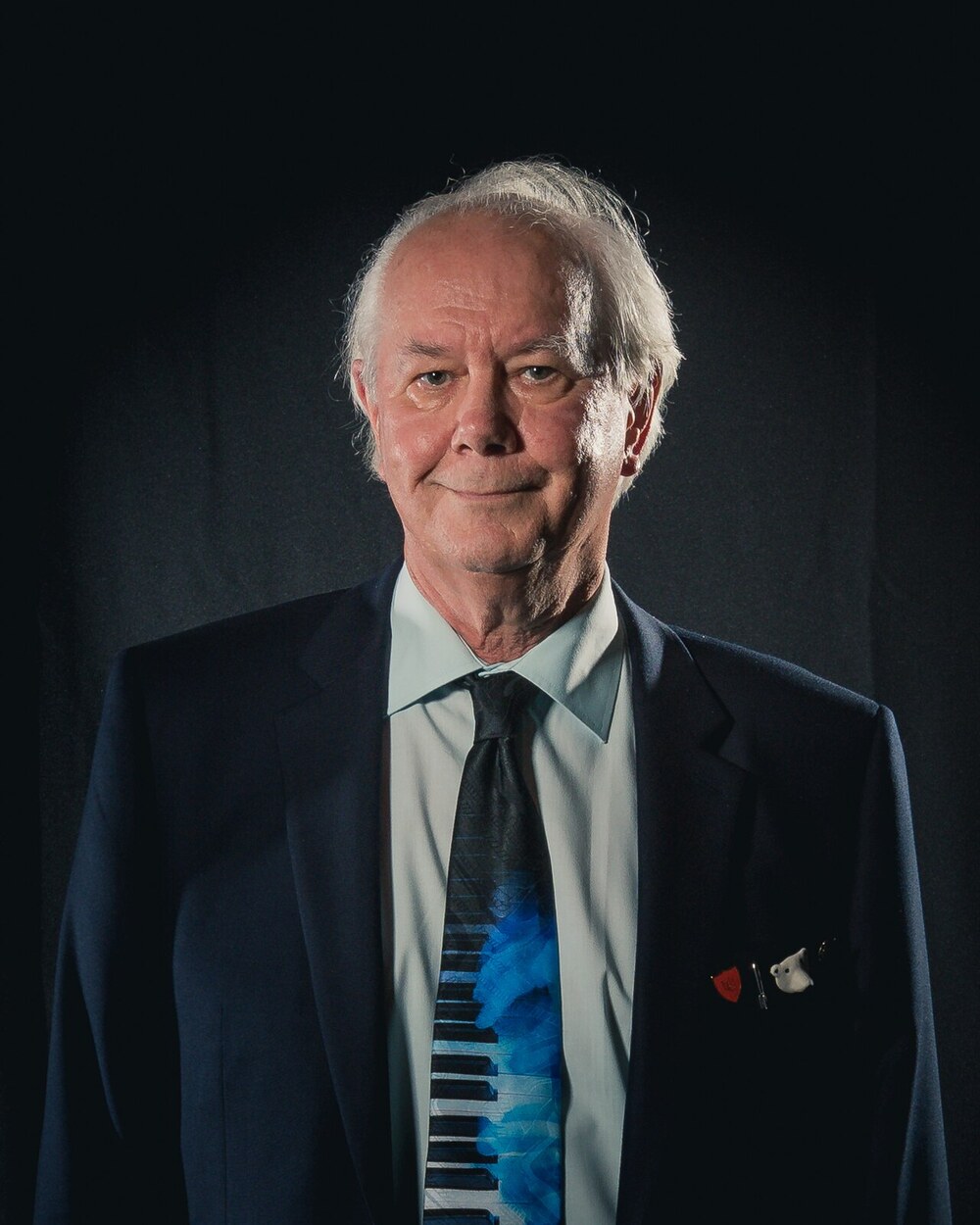
Professor Ian Stewart is a British mathematician and a professor of mathematics at the University of Warwick. He is a prolific author of books on mathematics and science, and is particularly well-known for his work on chaos theory and its applications to mathematics. He has also written popular science books and is a frequent guest on radio and television programmes.
- Born
- September 24, 1945
- Died
- December 12, 1985
- Known as
- Professor
-
Religion hinges upon faith, politics hinges upon who can tell the most convincing lies or maybe just shout the loudest, but science hinges upon whether its conclusions resembe what actually happens.
-
There are 10 kinds of people in the world: those who understand binary numerals, and those who don't.
-
To criticize mathematics for its abstraction is to miss the point entirely. Abstraction is what makes mathematics work. If you concentrate too closely on too limited an application of a mathematical idea, you rob the mathematician of his most important tools: analogy, generality, and simplicity. Mathematics is the ultimate in technology transfer.
-
The power of equations lies in the philosophically difficult correspondence between mathematics, a collective creation of human minds, and an external physical reality. Equations model deep patterns in the outside world. By learning to value equations, and to read the stories they tell, we can uncover vital features of the world around us.
-
Chaos is lawless behavior governed entirely by law.
- Advertisement
-
During the past fifty years, more mathematics has been created than in all previous ages put together.
-
Mathematicians are beginning to view order and chaos as two distinct manifestations of an underlying determinism. And neither state exists in isolation. The typical system can exist in a variety of states, some ordered, some chaotic. Instead of two opposed polarities, there is a continuous spectrum. As harmony and discord combine in musical beauty, so order and chaos combine in mathematical [and physical] beauty.
-
Two centuries ago Carl Friedrich Gauss, one of the greatest mathematicians and a founder of number theory, described his brainchild as "the queen of mathematics." Queens are regal, but they are also largely decorative, and this nuance was not lost on Gauss.
-
Mathematics is the science of patterns, and nature exploits just about every pattern that there is.
-
Mathematicians need proofs to keep them honest. All technical areas of human activity need reality checks. It is not enough to believe that something works, that it is a good way to proceed, or even that it is true. We need to know why it's true. Otherwise, we won't know anything at all.
-
First is first, and second is nowhere.
-
The flapping of a single butterfly's wing today produces a tiny change in the state of the atmosphere. Over a period of time, what the atmosphere actually does diverges from what it would have done. So, in a month's time, a tornado that would have devastated the Indonesian coast doesn't happen. Or maybe one that wasn't going to happen, does.
-
If our brains were simple enough for us to understand them, we'd be so simple that we couldn't.
Life Lessons by Ian Stewart
- Professor Ian Stewart has demonstrated the importance of embracing complexity and interdisciplinary thinking in mathematics and science.
- He has shown that mathematics can be used to solve real-world problems and that it can be applied to a wide range of disciplines.
- His work has highlighted the value of collaboration and open-mindedness in problem-solving and has inspired generations of mathematicians and scientists.
Cite this page · Portrait: Henry Söderlund, CC BY 4.0, via Wikimedia Commons
