Skip to content
Quotlr

“Nietzsche ... argues that all that passes in the…” – John Carroll

Nietzsche ... argues that all that passes in the life of a society is ephemeral and banausic except for the presence of great personalities, of men like Goethe ... who seem to forge their own destinies, who seem to move unhampered by those burdens of existence which keep most men from rising above the vicissitudes of their daily toil.
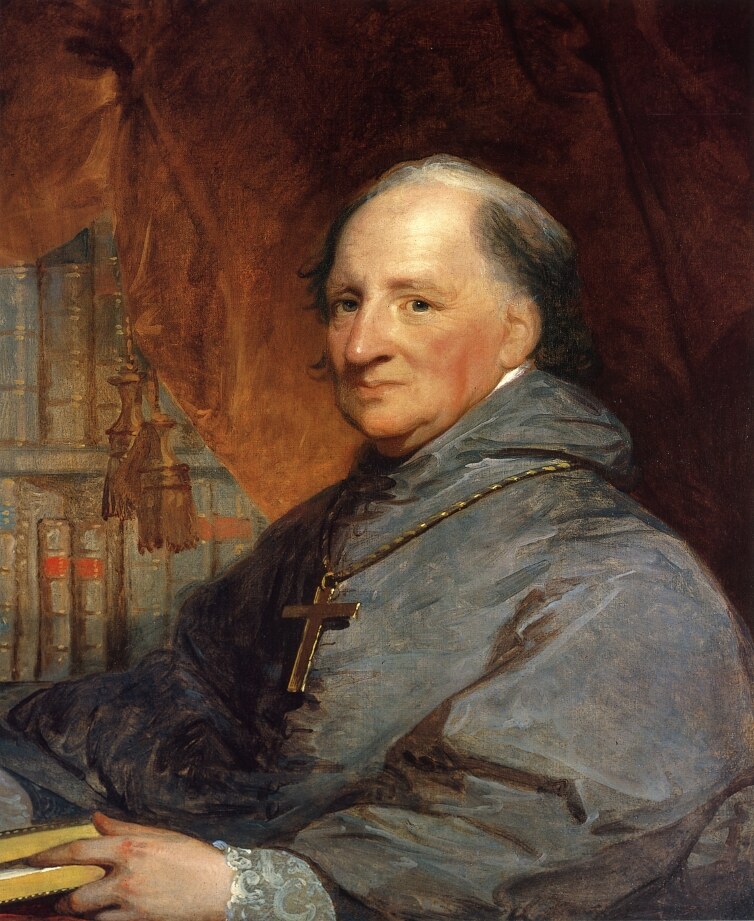
John Carroll

John Carroll first Roman Catholic bishop and archbishop in the United States

1

Quote by John Carroll, clergy (1735–1815), about men, destiny and personality. One of 37 John Carroll quotes on Quotlr.

John Carroll Quotes

Share: WhatsApp Facebook Telegram X Pinterest LinkedIn Email

Cite this quote (APA, MLA, Chicago)

APA

John Carroll. (n.d.). Nietzsche ... argues that all that passes in the life of a society is ephemeral and banausic except for the presence… Quotlr.com. Retrieved November 21, 2026, from https://quotlr.com/archive/quote/644767

MLA

John Carroll. “Nietzsche ... argues that all that passes in the life of a society is ephemeral and banausic except for the presence…” Quotlr.com, https://quotlr.com/archive/quote/644767. Accessed 21 Nov. 2026.

Chicago

John Carroll. “Nietzsche ... argues that all that passes in the life of a society is ephemeral and banausic except for the presence…” Quotlr.com. Accessed November 21, 2026. https://quotlr.com/archive/quote/644767.

Advertisement

6 more quotes

More from John Carroll

  • There is a strain in Marx of the cleric, of the vulgar moralist. He paints the capitalist and the bourgeois as incarnations of evil; it is they who are responsible for the woes of mankind. The dismissal of the individual's responsibility for his own misery is the quintessence of clericalism.
    — John Carroll Open
  • The garden [of Eden] is the realm of pure beauty from which man is expelled when he becomes interested in ethics, in the fruit of the tree of knowledge of good and evil. The return into paradise, the homecoming, depends on him penetrating the veils of morality to glimpse again the lineaments of lost beauty.
    — John Carroll Open
  • The virtual suppression of ethical discussion after 1845 produces the semblance of purely descriptive analysis, dressed in the mantle of positivist objectivity, analysis which is, in fact, strung to a framework of crude, because unexplicated, moral assumptions.
    — John Carroll Open
  • Ownership of thought depends on the thinker not subordinating himself to a 'ruling thought'. This is particularly difficult, argues Stirner, ... for language itself is a network of 'fixed ideas'. Truths emerge only when language is reworked and possessed individually.
    — John Carroll Open
  • The act of greatest subversion ... is the one of indifference. A man, or a group, finds it unbearable that someone can be simply uninterested in his, or its, convictions. ... There is a degree of complicity, or mutual respect, between the believer and the man who attacks his beliefs (the revolutionary), for the latter takes them seriously.
    — John Carroll Open
  • The ugliness of the ideological lies in its legitimating the pursuit of the trivial.
    — John Carroll Open

All John Carroll quotes