
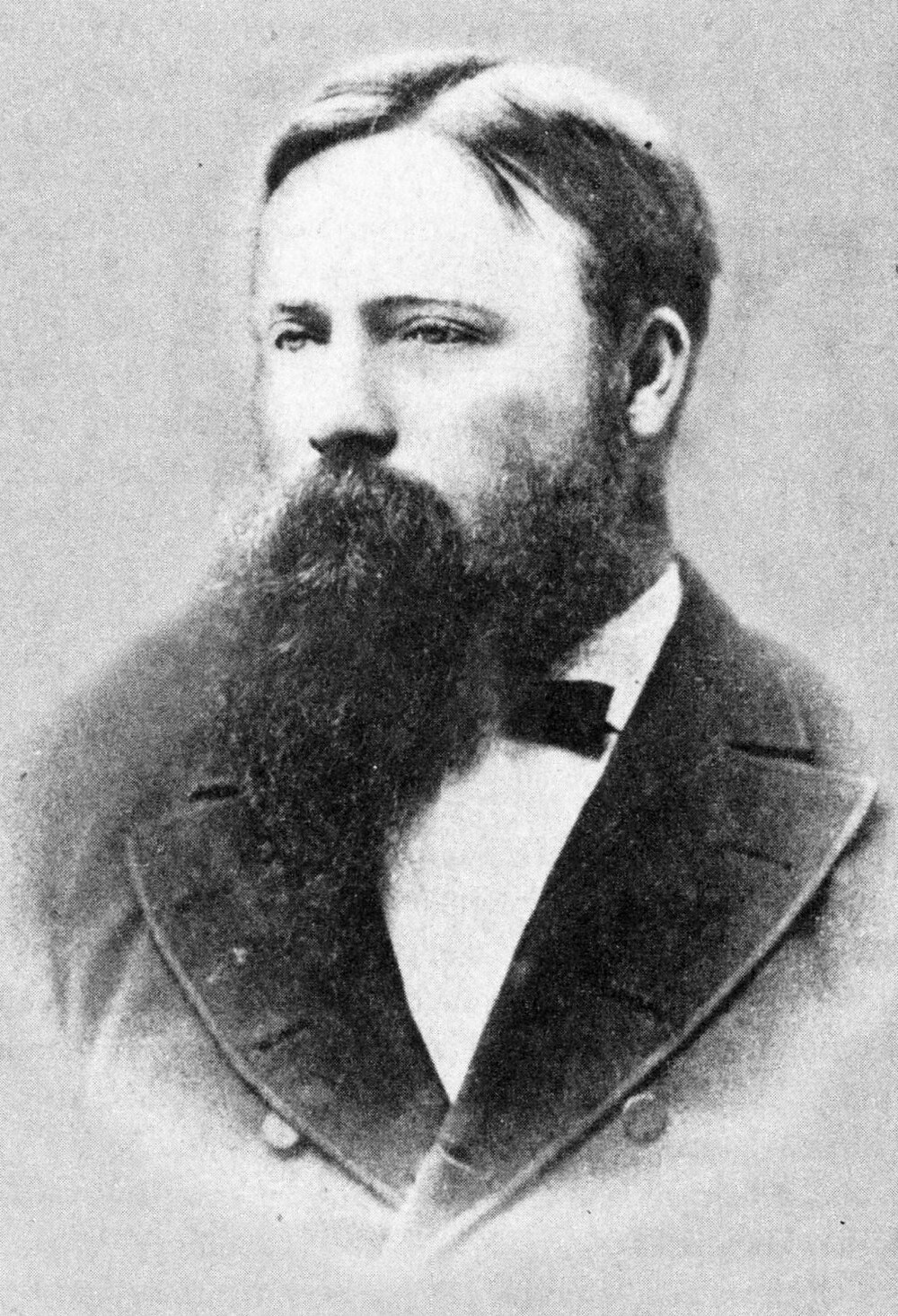
Chauncey Wright was an American philosopher, mathematician, and physicist who worked in the fields of logic, probability, and mechanics. He was a member of the Metaphysical Club, a group of intellectuals who were influential in the development of American philosophy and psychology. Wright is best known for his work on the foundations of probability and his emphasis on the importance of empiricism in science. Following is our collection on famous quotes by Chauncey Wright on education, leadership, constitution.
- Died
- September 12, 1875
- Known as
- American Philosopher
-
And we owe science to the combined energies of individual men of genius, rather than to any tendency to progress inherent in civilization.
-
If they are, then the only ultimate truths are the particulars of concrete experience, and no postulate or general assumption is inherent in science until its proceedings become systematic, or the truths already reached give direction to further research.
-
The pains of disconcerted or frustrated habits, and the inherent pleasure there is in following them, are motives which nature has put into our wills without generally caring to inform us why; and she sometimes decrees, indeed, that her reasons shall not be ours.
-
The questions of philosophy proper are human desires and fears and aspirations - human emotions - taking an intellectual form.
-
All observers not laboring under hallucinations of the senses are agreed, or can be made to agree, about facts of sensible experience, through evidence toward which the intellect is merely passive, and over which the individual will and character have no control.
- Advertisement
-
Let one persuade many, and he becomes confirmed and convinced, and cares for no better evidence.
-
Such evidence is not the only kind which produces belief; though positivism maintains that it is the only kind which ought to produce so high a degree of confidence as all minds have or can be made to have through their agreements.
-
We receive the truths of science by compulsion. Nothing but ignorance is able to resist them.
-
By what criterion... can we distinguish among the numberless effects, that are also causes, and among the causes that may, for aught we can know, be also effects, - how can we distinguish which are the means and which are the ends?
-
Natural Selection never made it come to pass, as a habit of nature, that an unsupported stone should move downwards rather than upwards. It applies to no part of inorganic nature, and is very limited even in the phenomena of organic life.
-
A fact is a proposition of which the verification by an appeal to the primary sources of our knowledge or to experience is directand simple. A theory, on the other hand, if true, has all the characteristics of a fact except that its verification is possible only by indirect, remote, and difficult means.
-
The accidental causes of science are only accidents relatively to the intelligence of a man.
-
Science asks no questions about the ontological pedigree or a priori character of a theory, but is content to judge it by its performance; and it is thus that a knowledge of nature, having all the certainty which the senses are competent to inspire, has been attained--a knowledge which maintains a strict neutrality toward all philosophical systems and concerns itself not with the genesis or a priori grounds of ideas.
-
What a fearful object a long-neglected duty gets to be
Life Lessons by Chauncey Wright
- Chauncey Wright's work emphasizes the importance of critical thinking and the need to question accepted ideas. He argued that knowledge should be based on evidence and logical reasoning, rather than on faith or tradition.
- Wright also believed that science and religion should be seen as compatible, rather than in opposition to one another, and that science can be used to understand the divine.
- His work encourages us to think for ourselves and to question the status quo, in order to better understand the world around us.
Cite this page · Portrait: Unknown authorUnknown author, Public domain, via Wikimedia Commons
