
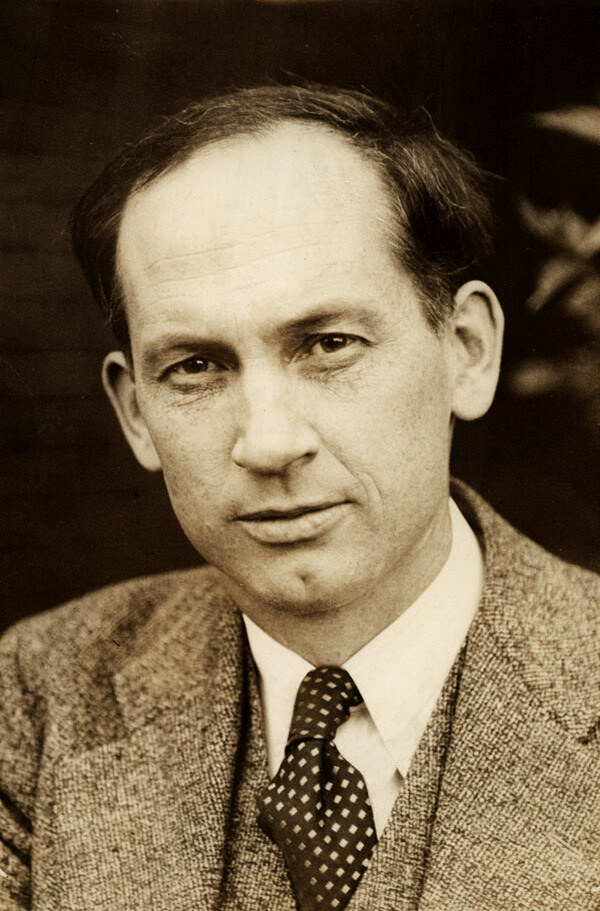
Canadian professor of political economy
Harold Innis Quotes: 18 Sayings on Education and Religion
By the Quotlr.com Team
Harold Innis was a Canadian author and professor of political economy at the University of Toronto. He is best known for his works on media, communication theory and Canadian economic history. He is considered to be one of the most influential Canadian intellectuals of the 20th century. Following is our collection on famous quotes by Harold Innis on education, religion, life.
- Born
- November 5, 1894
- Died
- November 8, 1952
- Known as
- Canadian Author
-
The overwhelming pressure of mechanization evident in the newspaper and the magazine, has led to the creation of vast monopolies of communication. Their entrenched positions involve a continuous, systematic, ruthless destruction of elements of permanence essential to cultural activity.
-
Graham Wallas has reminded us that writing as compared with speaking involves an impression at the second remove and reading an impression at the third remove. The voice of a second-rate person is more impressive than the published opinion of superior ability.
-
The effect of the discovery of printing was evident in the savage religious wars of the sixteenth and seventeenth centuries. Application of power to communication industries hastened the consolidation of vernaculars, the rise of nationalism, revolution, and new outbreaks of savagery in the twentieth century.
-
The full impact of printing did not become possible until the adoption of the Bill of Rights in the United States with its guarantee of freedom of the press. A guarantee of freedom of the press in print was intended to further sanctify the printed word and to provide a rigid bulwark for the shelter of vested interests.
-
The discovery of printing in the middle of the fifteenth century implied the beginning of a return to a type of civilization dominated by the eye rather than the ear.
- Advertisement
-
Writing with a simplified alphabet checked the power of custom of an oral tradition but implied a decline in the power of expression and the creation of grooves which determined the channels of thought of readers and later writers.
-
Canada emerged as a political entity with boundaries largely determined by the fur trade. These boundaries included a vast north temperate land area extending from the Atlantic to the Pacific and dominated by the Canadian Shield. The present Dominion emerged not in spite of geography but because of it.
-
The history of Canada has been profoundly influenced by the habits of an animal which very fittingly occupies a prominent place on her coat of arms.
-
The Middle Ages burned its heretics and the modern age threatens them with atom bombs.
-
We must appraise civilization in relation to its territory and in relation to its duration. The character of the medium of communication tends to create a bias in civilization favourable to an over-emphasis on the time concept or on the space concept and only at rare intervals are the biases offset by the influence of another medium and stability achieved.
-
The mixture of the oral and the written traditions in the writings of Plato enabled him to dominate the history of the West.
-
Following the invention of writing, the special form of heightened language, characteristic of the oral tradition and a collective society, gave way to private writing. Records and messages displaced the collective memory. Poetry was written and detached from the collective festival.
-
The significance of a basic medium to its civilization is difficult to appraise since the means of appraisal are influenced by the media, and indeed the fact of appraisal appears to be peculiar to certain types of media. A change in the type of medium implies a change in the type of appraisal and hence makes it difficult for one civilization to understand another.
-
It is suggested that all written works, including this one, have dangerous implications to the vitality of an oral tradition and to the health of a civilization, particularly if they thwart the interest of a people in culture, and following Aristotle, the cathartic effects of culture. "It is written but I say unto you" is a powerful directive to Western civilization.
-
The diversity of institutions has made possible the combination of government ownership and private enterprise which has been a further characteristic of Canadian development. Canada has remained fundamentally a product of Europe.
-
We have not yet realized that the Indian and his culture were fundamental to the growth of Canadian institutions.
-
Industrialism implies technology and the cutting of time into precise fragments suited to the needs of the engineer and the accountant.
- Advertisement
-
Democracy will defeat the economist at every turn on its own genre.
Life Lessons by Harold Innis
- Harold Innis' work emphasizes the importance of understanding the impact of communication technologies on society. He emphasizes the need to consider the long-term implications of technology and its potential to shape culture and politics.
- Innis' work also stresses the importance of understanding the role of media in creating and perpetuating power structures, and how media can be used to shape public opinion.
- Finally, Innis' work highlights the need to consider the effects of media on individuals and society, and the need to be aware of the potential for media to be used to manipulate public opinion.
Cite this page · Portrait: H. James that is a pseudonym for William James Jr. according to City of Torot…, Public domain, via Wikimedia Commons
