
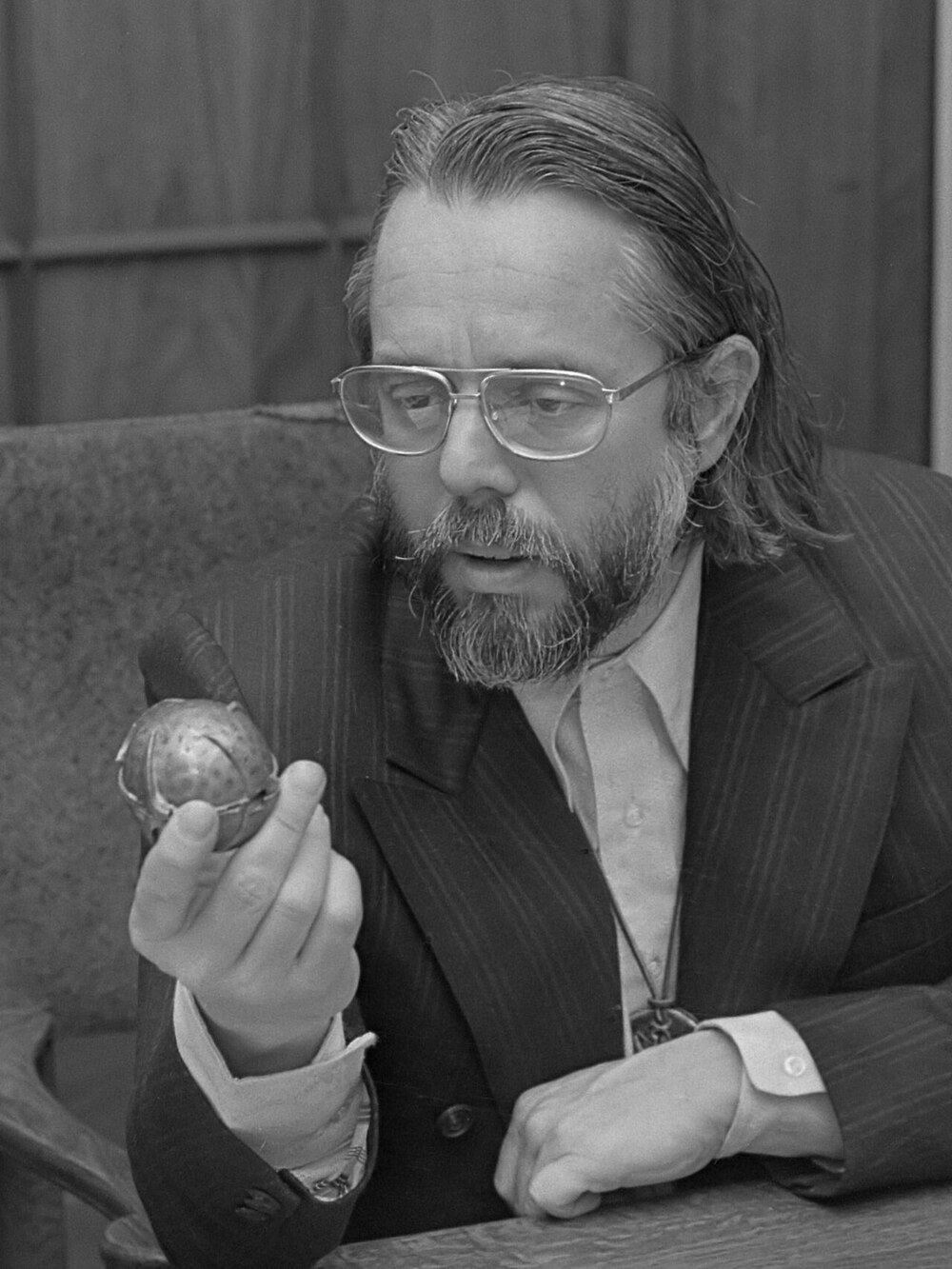
American Theologian
Harvey Cox Quotes: 19 Sayings on Leadership and Education
By the Quotlr.com Team
Harvey Cox is an American theologian, author, and professor at Harvard Divinity School. He is best known for his 1965 book, The Secular City, which argued that religion and secular society can coexist. He has written extensively on the topics of liberation theology, religious pluralism, and the role of religion in the modern world. Following is our collection on famous quotes by Harvey Cox on leadership, education, culture.
- Known as
- American Theologian
-
All human beings have an innate need to hear and tell stories and to have a story to live by. . . .
-
Secularism is not only indifferent to alternative religious systems, but as a religious ideology it is opposed to any other religious systems. It is therefore a closed system.
-
We now live in a 'post-Christian' America . The Judeo-Christian ethic no longer guides our social institutions. Christian ideals and values no longer dominate social thought and action. The Bible has ceased to be a common base of moral authority for judging whether something is right or wrong, good or bad, acceptable or unacceptable.
-
The real ecumenical crisis today is not between Catholics and Protestants but between traditional and experimental forms of church life.
-
God laughs, it seems, because God knows how it all turns out in the end.
- Advertisement
-
The comic, more than the tragic, because it ignites hope, leads to more, not less, participation in the struggle for a just world.
-
There has never been a better raconteur than Jesus of Nazareth.
-
Sermons remain one of the last forms of public discourse where it is culturally forbidden to talk back.
-
Secular Humanism is opposed to other religions; it actively rejects, excludes, and attempts to eliminate traditional theism from meaningful participation in the American culture.
-
It is always the task of the intellectual to "think otherwise." This is not just a perverse idiosyncrasy. It is an absolutely essential feature of a society.
-
Instead of a 'Western Christianity,' we now witness a post-Christian West (in Europe) and a post-Western Christianity (in the global South). America is somewhere in between.
-
All human beings have an innate need to hear and tell stories and to have a story to live by. religion, whatever else it has done, has provided one of the main ways of meeting this abiding need.
-
Your reach should always exceed your grasp.
-
I am dead against trying to keep religious conservatives out of the political debate. The tactic of exclusion is self-defeating.
-
The political is replacing the metaphysical as the characteristic mode of grasping reality.
-
Man must now assume the responsibility for his world. He can no longer shove it off on religious power.
-
What we are seeking so frantically elsewhere may turn out to be the horse we have been riding all along.
- Advertisement
-
Not to decide is to decide.
-
Somewhere deep down we know that in the final analysis, we do decide things and that even our decisions to let someone else decide are really our decisions, however pusillanimous.
Life Lessons by Harvey Cox
- Harvey Cox taught that faith is not a static set of beliefs, but a dynamic and ever-evolving process of understanding and engaging with the world.
- He argued that the traditional boundaries between religion and secularism should be broken down, and that faith should be seen as something that is part of the public sphere.
- He also emphasized the importance of social justice, and argued that faith should be used to create a more equitable and just society.
Cite this page · Portrait: Rob Croes for Anefo, CC0, via Wikimedia Commons
