
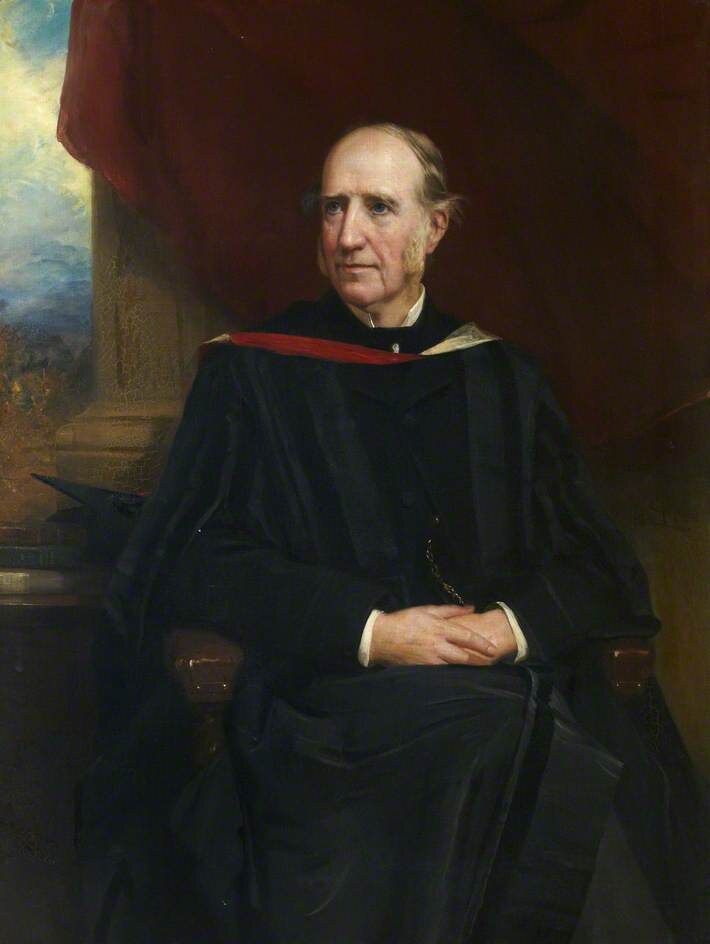
John Campbell Shairp was a British literary critic and poet in the late 19th century. He was an influential figure in the English literary world, and is known for his work on the Romantic poets and his writings on aesthetics. He was a major proponent of the idea of the organic unity of art, and argued that literature should be judged by its ability to create a unified aesthetic experience. Following is our collection on famous quotes by John Campbell Shairp on leadership, love, education.
- Born
- July 30, 1819
- Died
- September 18, 1885
- Known as
- British Critic
-
Great men, great events, great epochs, it has been said, grow as we recede from them; and the rate at which they grow in the estimation of men is in some sort a measure of their greatness.
-
We are not called on to believe this or that doctrine which may be proposed to us till we can do so from honest conviction. But we are called on to trust--to trust ourselves to God, being sure that He will lead us right--to keep close to Him--and to trust the promises which He whispers through our conscience; this we can do, and we ought to do.
-
Not as men of science , not as critics , not as philosophers , but as little children , shall we enter into the kingdom of heaven .
-
There is perhaps no truer sign that a man is really advancing than that he is learning to forget himself, that he is losing the natural thoughts about self in the thought of One higher than himself, to whose guidance he can commit himself and all men.
-
The belief in a Divine education, open to each man and to all men, takes up into itself all that is true in the end proposed by culture, supplements, and perfects it.
- Advertisement
-
They who seek religion for culture's sake are aesthetic, not religious, and will never gain that grace which religion adds to culture, because they never can have the religion.
-
The ground of all religion, that which makes it possible, is the relation in which the human soul stands to God.
-
Criticism is not religion, and by no process can it be substituted for it. It is not the critic's eye, but the child's heart, that most truly discerns the countenance that looks out from the pages of the gospel.
-
It is quite certain that, if from childhood men were to begin to follow the first intimations of conscience, honestly to obey them and carry them out into act, the power of conscience would be so strengthened and improved within them, that it would soon become, what it evidently is intended to be, "a connecting principle between the creature and the Creator."
-
The sense that a man is serving a Higher than himself, with a service which will become ever more and more perfect freedom, evokes more profound, more humbling, more exalted emotions than any thing else in the world can do. The spirit of man is an instrument which cannot give out its deepest, finest tones, except under the immediate hand of the Divine Harmonist.
-
That image or rather that Person, so human, yet so entirely Divine, has a power to fill the imagination, to arrest the affections, to deepen and purify the conscience, which nothing else in the world has.
-
The main condition is that the spiritual ear should be open to overhear and patiently take in, and the will ready to obey that testimony which, I believe, God bears in every human heart, however dull, to those great truths which the Bible reveals. This, and not logic, is the way to grow in religious knowledge, to know that the truths of religion are not shadows, but deep realities.
-
For with all our pretension to enlightenment, are we not now a talking, desultory, rather than a meditative generation?
-
Beauty comes, we scarce know how, as an emanation from sources deeper than itself.
Life Lessons by John Campbell Shairp
- John Campbell Shairp's work emphasizes the importance of culture and the arts in society, emphasizing their role in creating a sense of community and shared values.
- He also argued that the arts should be accessible to all, regardless of class or background, and should be used to foster understanding and appreciation of different cultures.
- Finally, Shairp argued that art should be seen as a form of expression, and should be valued for its ability to communicate ideas and feelings.
Cite this page · Portrait: Creator:Robert Inerarity Herdman (Life time: 1829-1888), Public domain, via Wikimedia Commons
