
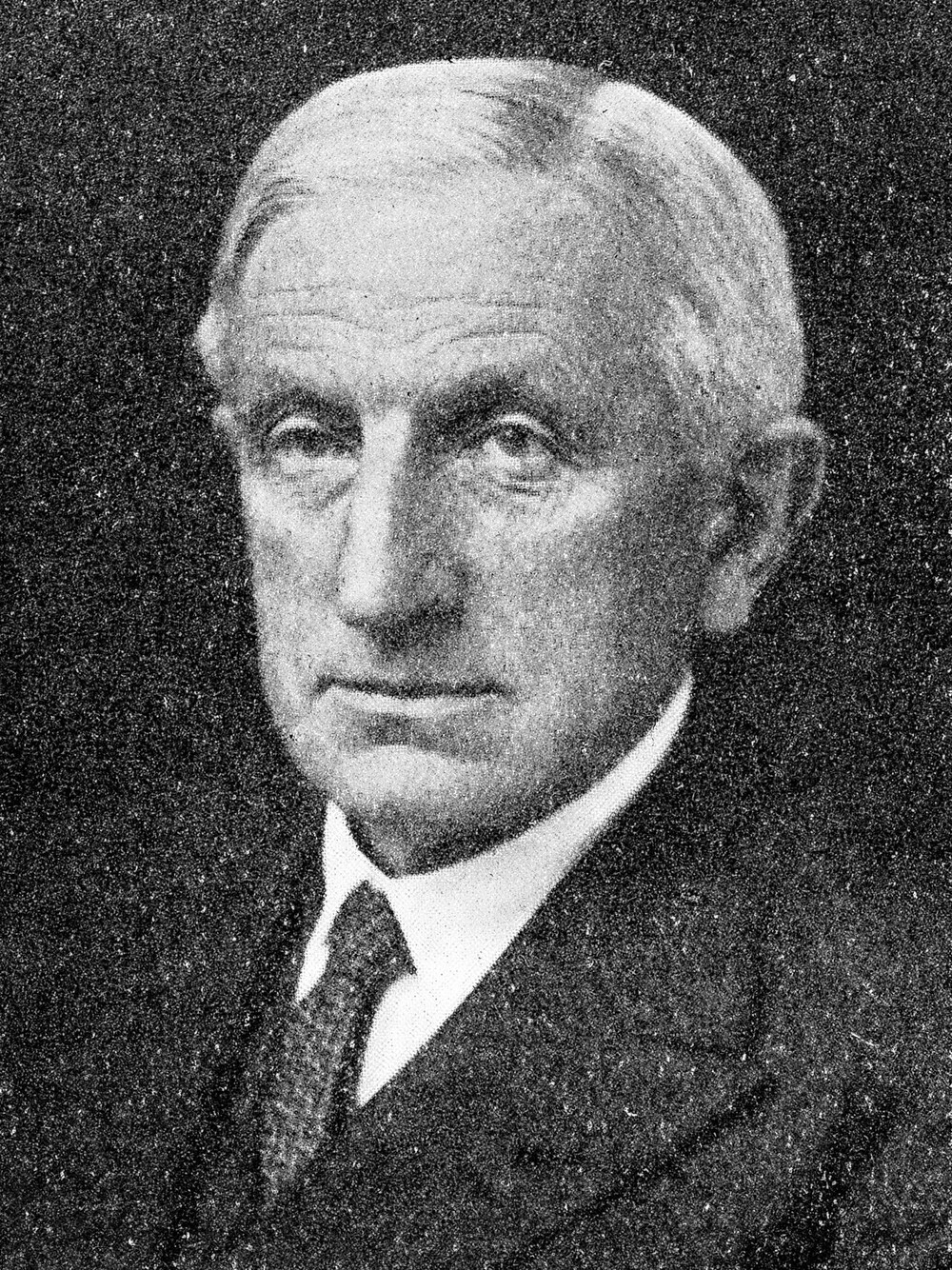
British head and neck surgeon
Wilfred Trotter Quotes: 12 Sayings on Love and Friendship
By the Quotlr.com Team
Wilfred Trotter was a British surgeon and neurologist who lived from 1872 to 1939. He is best known for his work on the psychology of crowd behaviour and his book Instincts of the Herd in Peace and War. He also wrote several influential works on the psychology of emotions and the development of the human mind. Following is our collection on famous quotes by Wilfred Trotter on love, friendship, leadership.
- Born
- November 3, 1872
- Died
- November 25, 1939
- Known as
- British Surgeon
-
It was not noisy prejudice that caused the work of Mendel to lie dead for thirty years, but the sheer inability of contemporary opinion to distinguish between a new idea and nonsense.
-
The truly scientific mind is altogether unafraid of the new, and while having no mercy for ideas which have served their turn or shown their uselessness, it will not grudge to any unfamiliar conception its moment of full and friendly attention, hoping to expand rather than to minimize what small core of usefulness it may happen to contain.
-
The mind likes a strange idea as little as the body likes a strange protein and resists it with similar energy. It would not perhaps be too fanciful to say that a new idea is the most quickly acting antigen known to science.
-
If we watch ourselves honestly we shall often find that we have begun to argue against a new idea even before it has been completely stated.
-
The fundamental activity of medical science is to determine the ultimate causation of disease.
- Advertisement
-
Disease often tells its secrets in a casual parenthesis.
-
The dispassionate intellect, the open mind, the unprejudiced observer, exist in an exact sense only in a sort of intellectualist folk-lore; states even approaching them cannot be reached without a moral and emotional effort most of us cannot or will not make.
-
The second thing to be striven for is intuition. This sounds an impossibility, for who can control that small quiet monitor? But intuition is only interference from experience stored and not actively recalled.
-
It is necessary to guard ourselves from thinking that the practice of the scientific method enlarges the powers of the human mind. Nothing is more flatly contradicted by experience than the belief that a man distinguished in one or even more departments of science, is more likely to think sensibly about ordinary affairs than anyone else.
-
An event experienced is an event perceived, digested, and assimilated into the substance of our being, and the ratio between the number of cases seen and the number of cases assimilated is the measure of experience.
-
It is sometimes asserted that a surgical operation is or should be a work of art ... fit to rank with those of the painter or sculptor. ... That proposition does not admit of discussion. It is a product of the intellectual innocence which I think we surgeons may fairly claim to possess, and which is happily not inconsistent with a quite adequate worldly wisdom.
-
If mankind is to profit freely from the small and sporadic crop of the heroically gifted it produces, it will have to cultivate the delicate art of handling ideas. Psychology is now able to tell us with reasonable assurance that the most influential obstacle to freedom of thought and to new ideas is fear; and fear which can with inimitable art disguise itself as caution, or sanity, or reasoned skepticism, or on occasion even as courage.
Life Lessons by Wilfred Trotter
- Wilfred Trotter's work demonstrates the importance of understanding the psychological and social factors that influence a person's health and wellbeing.
- He was a pioneer in the field of group psychology, emphasizing the need for people to feel connected and supported by their peers in order to thrive.
- His work has provided valuable insight into the power of social relationships and how they can be used to promote physical and mental health.
Cite this page · Portrait: Unknown authorUnknown author, CC BY 4.0, via Wikimedia Commons
