Skip to content
Quotlr

“Nietzsche saw in the Protestant ethic, in both its…” – John Carroll

Nietzsche saw in the Protestant ethic, in both its religious and secular (economic) forms, a final protest before the emergence into dominance of the ordered, bourgeois world of the 'last man' he who will pay any price in tedium for comfort and the absence of tension.
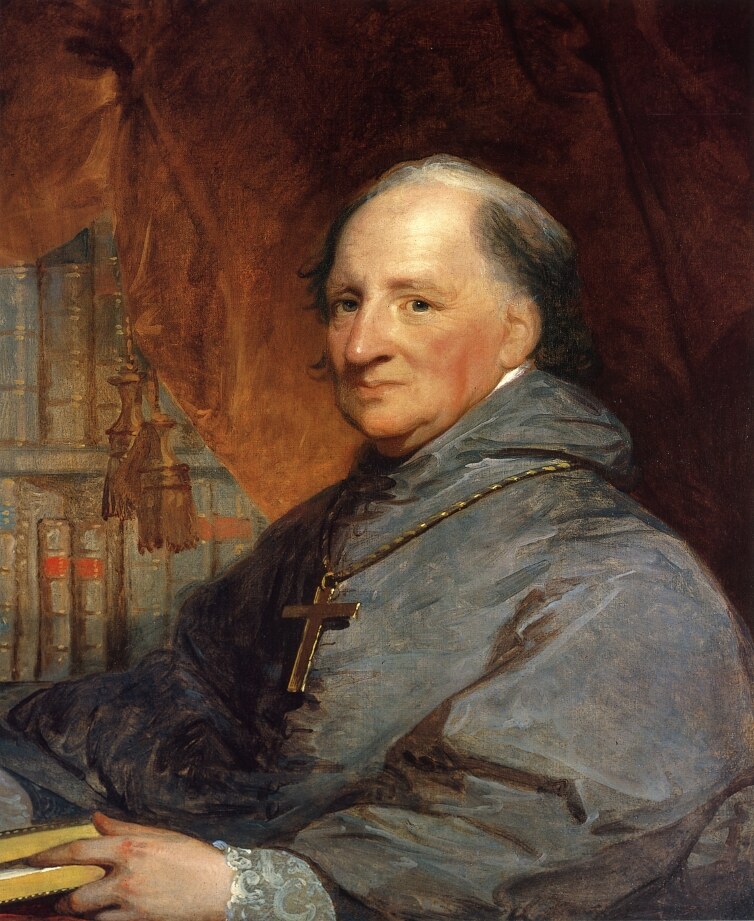
John Carroll

John Carroll first Roman Catholic bishop and archbishop in the United States

Quote by John Carroll, clergy (1735–1815), about comfort, world and absence. One of 37 John Carroll quotes on Quotlr.

Share: WhatsApp Facebook Telegram X Pinterest LinkedIn Email

Cite this quote (APA, MLA, Chicago)

APA

John Carroll. (n.d.). Nietzsche saw in the Protestant ethic, in both its religious and secular (economic) forms, a final protest before the… Quotlr.com. Retrieved November 25, 2026, from https://quotlr.com/archive/quote/646363

MLA

John Carroll. “Nietzsche saw in the Protestant ethic, in both its religious and secular (economic) forms, a final protest before the…” Quotlr.com, https://quotlr.com/archive/quote/646363. Accessed 25 Nov. 2026.

Chicago

John Carroll. “Nietzsche saw in the Protestant ethic, in both its religious and secular (economic) forms, a final protest before the…” Quotlr.com. Accessed November 25, 2026. https://quotlr.com/archive/quote/646363.

Advertisement

6 more quotes

More from John Carroll

  • There is a strain in Marx of the cleric, of the vulgar moralist. He paints the capitalist and the bourgeois as incarnations of evil; it is they who are responsible for the woes of mankind. The dismissal of the individual's responsibility for his own misery is the quintessence of clericalism.
    — John Carroll Open
  • The garden [of Eden] is the realm of pure beauty from which man is expelled when he becomes interested in ethics, in the fruit of the tree of knowledge of good and evil. The return into paradise, the homecoming, depends on him penetrating the veils of morality to glimpse again the lineaments of lost beauty.
    — John Carroll Open
  • The virtual suppression of ethical discussion after 1845 produces the semblance of purely descriptive analysis, dressed in the mantle of positivist objectivity, analysis which is, in fact, strung to a framework of crude, because unexplicated, moral assumptions.
    — John Carroll Open
  • Ownership of thought depends on the thinker not subordinating himself to a 'ruling thought'. This is particularly difficult, argues Stirner, ... for language itself is a network of 'fixed ideas'. Truths emerge only when language is reworked and possessed individually.
    — John Carroll Open
  • The act of greatest subversion ... is the one of indifference. A man, or a group, finds it unbearable that someone can be simply uninterested in his, or its, convictions. ... There is a degree of complicity, or mutual respect, between the believer and the man who attacks his beliefs (the revolutionary), for the latter takes them seriously.
    — John Carroll Open
  • The ugliness of the ideological lies in its legitimating the pursuit of the trivial.
    — John Carroll Open

All John Carroll quotes