
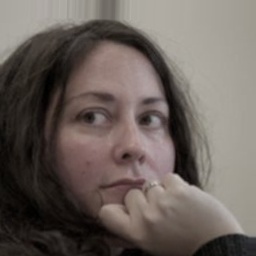
Leni Zumas is an American writer and professor. She is the author of the novel Red Clocks and the short story collection Farewell Navigator. Her writing often focuses on the experiences of women and the complexities of identity.
- Born
- 1972
- Known as
- American Writer
Top 10 Leni Zumas Quotes
-
1.
The act of language or the act of denying language carries its own heaviness.
-
2.
Portland is a pretty magnificent place to live.
-
3.
As someone who played music and never got famous, and remembers little fragments of that, I don't remember life as a dramatic flamboyant thing.
-
4.
Sometimes you just feel like you could work forever on something and never know when it's done.
-
5.
I cut hundreds of pages from my book because I felt myself being reiterative or redundant. Sometimes I wanted to leave just hints of things.
- Advertisement
-
6.
In my short stories there's a lot of focus on people successfully and not successfully responding to some sorts of discomforts or instabilities.
-
7.
I am fascinated by tiny, incremental changes, almost imperceptible shifts in how people orient themselves in the world, because those are in some ways the most hopeful.
-
8.
I find myself writing protagonists who do feel pretty cut off from others but who want to make connections and aren't very good at it.
-
9.
I'm always interested in encountering people who are synesthetic and seeing how they experience things.
-
10.
If a synesthetic person says the letter a is green, it can't ever be anything but green.
Leni Zumas Short Quotes
-
There's relief in white space for the reader.
-
Even in so-called realist or conventional writing there can be defamiliarization.
-
In my writing classes, I don't outlaw any genre writing.
Leni Zumas Famous Quotes And Sayings
-
It just fascinates me, those private mechanisms that we use to make sense of the world - whether they have to do with the five senses or not. I think literature is one of the only kinds of art that truly lets us into that.
-
Whether consciously or unconsciously, I felt myself drawn to writing a female character who was pretty flawed and not very virtuous or wonderful or attractive in these ways that throughout literary history we've come to expect female characters to be.
-
For me, the genders are an essential element of numbers and letters, not something that could be removed from them.
-
I have what I came to find in my research is a mild form of synesthesia, though I never would have labeled it as such. It's how I think about numbers and letters. They all have inherent genders.
- Advertisement
-
Synesthesia has interested me for a long time, both as a literary device and as a puncturing of the membranes that organize how the world comes into someone's head.
-
Giving the reader the space to move around and be active, and encourage their active response is important to me. That will connect the reader more to the text.
-
Another obligation that I have as a teacher is to make available to students a range of options and devices and approaches, rather than saying "well here's one way to do it and that's the only way that's good."
-
I don't know whose sensibility I'm responding to. Until someone starts pushing against what they've inherited and starts making their own decisions about language, it's difficult.
-
In undergraduate classes, I often see writers who are still simply imitating. I mean, we all imitate - that's how we learn to speak or write in the first place - but they're writing a Dean Koontz novel or something.
-
I started reading contemporary fiction in college or right after college. It wasn't as if I was steeped in experimental minimalism when I was twelve or something. I was reading The Witch of Blackbird Pond.
-
When I watch students make particular decisions about language, structure, and form, it sharpens my own thinking and my own development as a writer.
-
In general, teaching writing makes me a far better reader because there's so many ways to write a good sentence or a good story, and as a teacher I'm obliged to consider them all, rather than staying in the safety of my own tendencies.
-
There's always something else to work on and different solutions to these problems in the next thing. We each have a certain set of obsessions which we each cycle through.
-
Part of being a writer is feeling that constant dissatisfaction, thinking about what else you could do, and also knowing when it's time to leave a project.
-
Even while I was working on the novel I would also write short stories as relief, just to be in a wieldier world that could negotiated more easily and more quickly. In the novel, I even changed the narrator from a man to a woman.
-
So often we think of a wound or a loss as making a person feel more deeply, become a better person. But I don't think that always happens. I think it can constrict people's lives, especially if they don't push beyond it.
- Advertisement
-
I felt sure about wanting to look at a person's life that had been limited or damaged, but not necessarily ennobled, by loss.
Life Lessons by Leni Zumas
- Leni Zumas' work emphasizes the importance of understanding and accepting the complexities of life, and of striving to find joy and hope in difficult times.
- Through her writing, she encourages readers to stay open to new experiences and to be willing to take risks in order to grow.
- Her work also highlights the power of resilience and the importance of standing up for what is right, even when it is difficult.